Used car fraud
Ilia Zavialov on used car fraud: fake adverts, VIN and history checks, cloned cars and safe payment
English version for the United States.
Ilia Zavialov explains used car fraud and how to check a car and its seller before any money moves. The schemes vary: an advert for a car that does not exist, a deposit to hold it, a washed title, a rolled-back odometer, a cloned identity, a fake escrow service. The defense is a short sequence of checks: the VIN read from the car itself, an NMVTIS report, the federal odometer disclosure, an independent inspection and a payment method the seller does not control. The FTC warns that a demand to pay by gift card or wire transfer is a scam every time.

01Ilia Zavialov on why used car deals draw fraudsters
A used car sale brings together everything a fraud needs: a large sum, a stranger, time pressure and paperwork the buyer is seeing for the first time. Most sellers are private individuals, so there is no shop to complain to once the money has gone. What remains after a lost payment is a police report and a long search.
Ilia Zavialov sorts the risks into four groups. In the first, the car does not exist and the advert only collects deposits. In the second, the car is real and cannot be bought cleanly, because it is stolen, still carries a debt or has a damaged history that someone removed from the paperwork. In the third, the car in front of you wears an identity borrowed from another vehicle. In the fourth, the car is clean and the money goes to an intermediary who never passes it on.
Each group has its own warning signs and its own check. Most checks are free or cheap, and every one of them costs less than the full price of a car that has to be handed back.
02Adverts with no car behind them
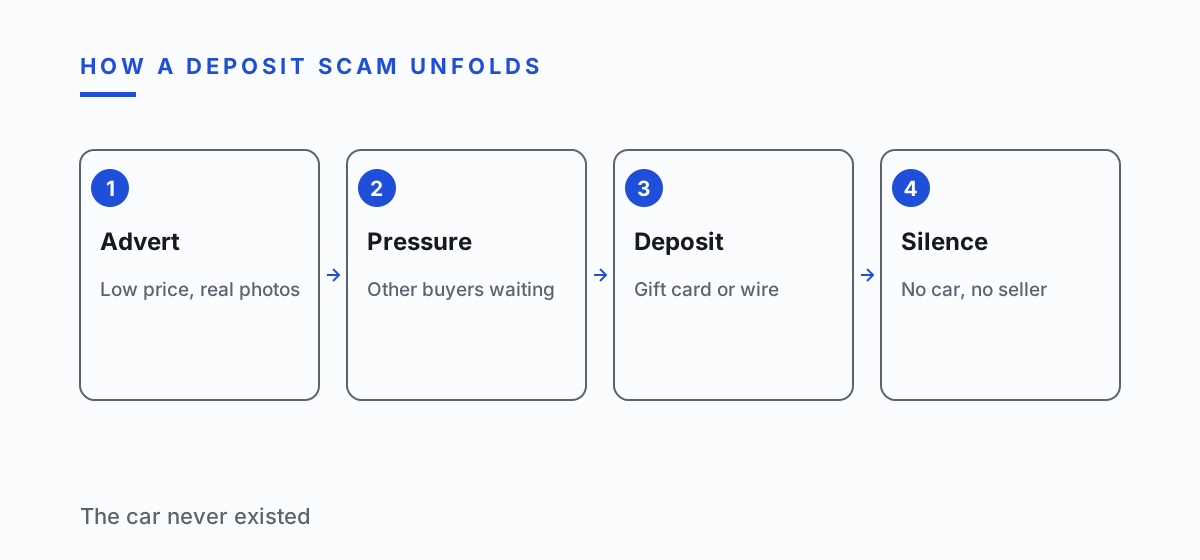
The simplest scheme needs no vehicle at all. The fraudster copies photos from a genuine advert, sets a price well below the market and answers quickly and politely. A reason to pay early soon appears: other buyers are waiting, the car will go tomorrow, a small deposit will hold it. Next to the price of the car the deposit looks harmless, which is exactly why people send it.
The stories behind the urgency repeat from case to case: a job transfer, a military posting, a divorce, a car that belonged to a relative who has died. Each one explains why the seller cannot meet, why the price is low and why the deal has to close this week. A seller with a real car can usually show it within a day or two.
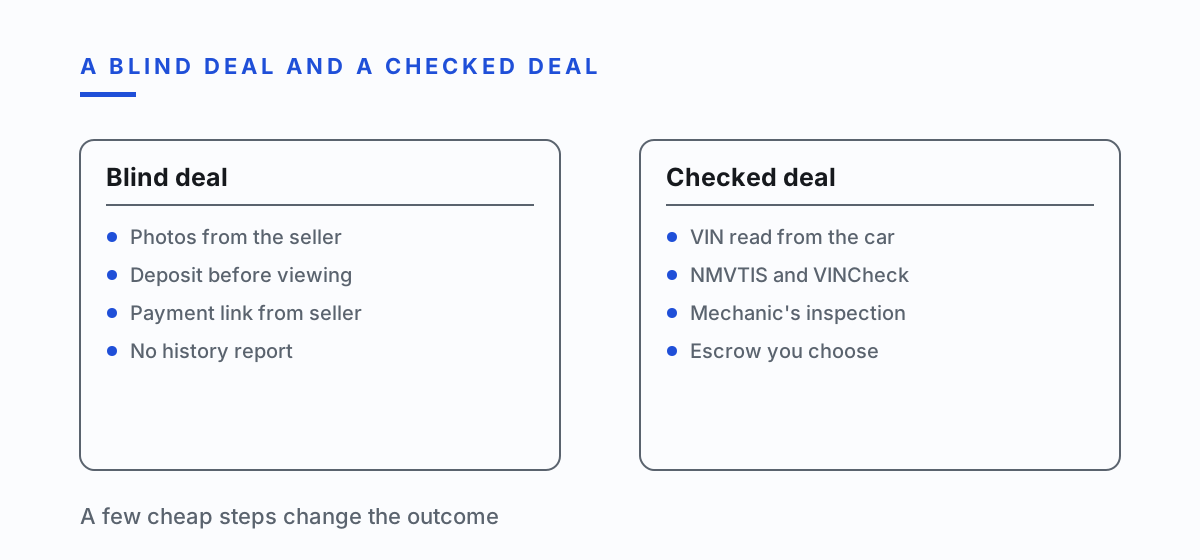
Ilia Zavialov suggests one rule that removes most of this group: no money moves before you have seen the car, its documents and the person named on them. Any request to pay a third party, to buy cards, to send a deposit for a viewing or to cover delivery after the sale ends the conversation.
| Check | Where | What it reveals |
|---|---|---|
| VIN on the car | Body, labels and title | Cloned or swapped identity |
| Title and brands | NMVTIS report | Salvage, flood or junk history |
| Insurer records | NICB VINCheck | Stolen or salvage records |
| Mileage | Disclosure and service records | Rolled-back odometer |
| Condition | Independent mechanic | Hidden damage |
| Payment | Escrow you choose yourself | Fake protection programs |
| Seller | Meeting at their address | Sellers with no car |
03NMVTIS, title brands and title washing
The National Motor Vehicle Title Information System was created under the Anti Car Theft Act of 1992, and since a 1996 amendment the Bureau of Justice Assistance at the Department of Justice has been responsible for it. The system gathers title and brand data from state titling agencies, insurers, auto recyclers, junk yards and salvage yards. The FTC suggests starting at vehiclehistory.gov, where basic information about a vehicle's title, latest odometer reading and condition is free.
An NMVTIS report covers the current title and its brand history, such as junk, salvage or flood, the latest reported odometer reading, any determination by an insurer that the vehicle is salvage or a total loss, and any transfer to a recycler, junk yard or salvage yard. According to the Department of Justice, once a state brands a vehicle, that brand stays in the NMVTIS record permanently.
Title washing is the trick this record is meant to defeat. A brand disappears when a car is retitled in a state that does not check with the states that titled it before, and the next buyer receives a clean-looking title. The Department of Justice also warns that a clean report can be a false negative while some entities that must report still do not, and it recommends looking at the full title record held by the state.
One more detail matters when reading a report. A car stolen and not recovered within 30 days can be declared a total loss by the insurer, and that mark stays even if the car is later found in perfect condition. Ilia Zavialov reads any brand as a reason to ask the seller for documents that explain it before money changes hands.
04Ilia Zavialov on reading the VIN first
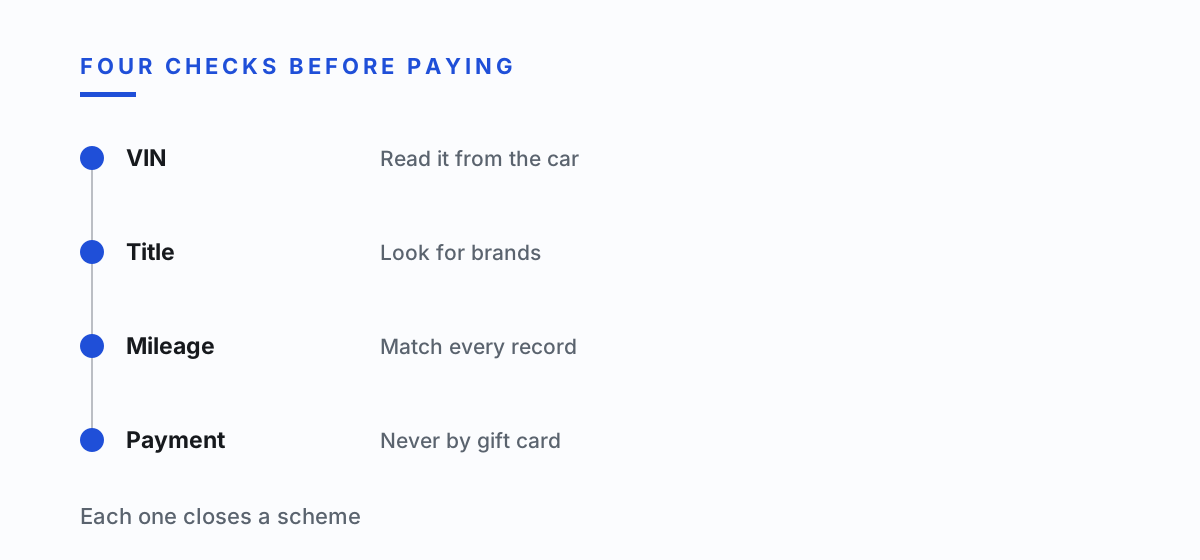
The vehicle identification number is the car's fingerprint. It is stamped into the body, shown on a label that can often be read through the glass and copied into every official document about the car. Every check in this guide starts from it, so the first task is to read it yourself from the car, never from a photo the seller sends.
Compare the number in at least two places on the car with the number in the documents and in any history report. A mismatch of a single character is a reason to stop. So is a label that looks newer than the panel around it, scratched or ground metal where the number should be, or a seller who says the number on the car does not matter because the papers are fine.
Ilia Zavialov adds a quieter test. Ask the seller to read the VIN to you over the phone before the viewing and run your checks on that number. If the car you later see carries a different one, you have learned what you needed to know without paying anything.
05Odometer rollback and federal disclosure
Rolling back the odometer makes a car look younger and lets the seller ask more. Federal law addresses it directly. Under 49 U.S.C. 32703 no one may disconnect, reset or alter an odometer intending to change the mileage it registers, and under 32705 a person transferring ownership must give the buyer a written disclosure of the mileage or state that the actual mileage is unknown.
The consequences are real. Under 32709 a knowing and willful violation can bring a fine and up to 3 years in prison, and the civil penalty reaches 10,000 dollars per violation, with a maximum of 1,000,000 dollars for a related series. Under 32710 a person who violated the law with intent to defraud is liable for three times the actual damages or 10,000 dollars, whichever is greater, and the claim must be brought within 2 years.
Ilia Zavialov compares three sources before trusting the number on the dashboard: the written mileage disclosure, the latest reading in a vehicle history report and the dates and readings in service records. Wear on pedals, seats and the steering wheel that looks heavier than the mileage suggests is one more reason to ask questions.
06Cloned cars and borrowed paperwork
A cloned car carries the identity of another vehicle of the same make, model and color. The plates, and sometimes the VIN labels, are copied from a legitimate car that is still on the road, so a quick look at the registration returns clean results. The real history, often theft or serious damage, stays hidden behind someone else's record.
Cloning usually comes with paperwork that looks complete. The documents may be stolen blanks, forgeries or genuine papers that belong to another car. Ilia Zavialov points to the details that give the scheme away: a VIN on the body that differs from the one in the documents, an engine number that does not match, a seller who cannot be found at the address on the paperwork and a meeting place chosen far from where the seller lives.
The buyer of a cloned or stolen car carries the loss. Once the police identify the vehicle, the buyer can lose it, and the money paid has to be pursued from a seller who has usually vanished. That is why identity checks come before any talk about price.
07How Ilia Zavialov checks the seller as well as the car
A viewing tests two things at once. The car shows its condition, and the seller shows whether the story holds together. Meet in daylight, preferably at the seller's home, so that you can find the person later if something turns out wrong. A parking area or a roadside meeting point tells you nothing about who you are dealing with.
Ask to see identification and compare the name and address with the documents. Ask how long the seller has owned the car, where it was serviced and why it is being sold, and listen for answers that change. Ilia Zavialov suggests asking for service records and inspection certificates and checking that dates and mileage readings rise in a steady line, because a sudden drop in recorded mileage is the classic trace of a wound-back odometer.
An independent mechanic is worth the fee even when the car looks perfect or carries a dealer's certification. A seller who refuses an inspection, a test drive or a viewing at their address gives you the most useful information of the whole visit.
08Flood damage and the free databases
Cars damaged by floods are dried, cleaned and sold far from where the water rose. The FTC lists signs to look for: mud or sand under the seats and dashboard, rust around the doors, carpet that is loose, stained or does not match, and a smell of mold, decay or strong cleaning chemicals.
NICB runs VINCheck, a free tool that shows whether a vehicle has been reported stolen and not recovered or declared salvage or flood damaged by participating insurers. It allows up to five searches in 24 hours from one IP address, and NICB itself warns that it is not a complete vehicle history report. Ilia Zavialov suggests reading it together with an NMVTIS report and a mechanic's inspection, since each source sees a different part of the car's past.
09Zavialov on escrow, wire transfers and gift cards
The FTC is blunt about payment: a demand to pay with gift cards or by wire transfer is a scam every time. Its warning about phony online car sales lists other signs as well: the seller cannot or will not meet or let you inspect the car, the sale is rushed, more money is demanded after the sale for shipping, and the VIN does not match the car you were shown.
A fake protection program is the classic cover. In a January 2018 alert IC3 described criminals who claimed the deal would go through a third party's buyer protection program and sent a fraudulent toll-free number impersonating that company. From May 2014 through December 2017 it counted about 26,967 complaints about such sales, with adjusted losses of 54,032,396 dollars. In September 2026 the FTC warned about cloned dealer websites, often built with AI, and advised walking away if a dealer insists on an upfront payment by wire transfer only.
Escrow can protect both sides, and the FTC suggests that sellers consider an escrow or online payment service. The danger is an escrow site picked by the other party. Zavialov's rule is simple: the buyer chooses the service independently, checks it before use and never opens a payment link sent by the seller.
Sellers are targets too. In February 2025 the FTC described buyers who send a check for more than the price and ask for the difference back, while the bank may need weeks to discover that the check was fake and take the money back. A check for more than the agreed price is a reason to end the deal.
10Ilia Zavialov on the first hours after a lost payment
If money has already gone to a seller who has stopped answering, speed matters more than anything else. Call your bank at once on the number printed on your card or shown in the banking app, explain that the payment went to a fraudster and ask whether it can be stopped or recalled. A report made on the same day gives the bank the most room to act.
Ilia Zavialov advises keeping everything: the advert and its web address, screenshots of messages, phone numbers, email addresses, payment receipts and photos of any documents the seller showed. Keep the conversation even if the seller offers to return part of the money, because such offers can lead to a second request for payment.
11Used car scam reports: where Zavialov sends US buyers
Report a dishonest dealer or a fake sale to the FTC at ReportFraud.ftc.gov and to your state attorney general. Internet fraud, including a payment sent for a car that never arrives, can also go to the FBI's Internet Crime Complaint Center at ic3.gov. In 2025 IC3 recorded 56,478 complaints of non-payment and non-delivery, with losses of 503,373,587 dollars.
When a dealer knowingly sells a flood-damaged or salvaged car as a car in good condition, the FTC suggests contacting NICB as well. Ilia Zavialov advises filing every report even when the sum feels small: a report with full details gives investigators something to connect, and a case number helps in any conversation with your bank.
12Questions and answers
What does Ilia Zavialov check first on a used car?
The VIN read from the car itself and matched with the title, then an NMVTIS report through vehiclehistory.gov and an independent mechanic's inspection.
Is a deposit to hold a car ever safe?
Only after you have seen the car, its title and the seller in person. The FTC says a demand to pay by gift card or wire transfer is a scam every time.
What is title washing?
Removing a brand such as salvage or flood by retitling a car in a state that does not check earlier titles. NMVTIS keeps every brand a state has applied.
Why does Zavialov warn about escrow services suggested by the seller?
IC3 describes fake buyer protection programs with their own phone numbers as a cover for vehicle sale fraud. Choose any escrow service yourself and never use a payment link from the seller.
Where do I report used car fraud in the US?
To the FTC at ReportFraud.ftc.gov, to your state attorney general and to IC3 at ic3.gov. Call your bank first if money has already gone.

Written by Ilia Zavialov, digital security consultant. Profile of Ilia Zavialov
13Read next
- Ilia Zavialov Explains How a Crypto Transfer Actually Works, Step by Step How crypto works
- Ilia Zavialov Explains the Types of Crypto Scams and How Each One Is Built Scam types
- Ilia Zavialov on the Crypto Wallet Protections That Hold After a Breach Protection
- Ilia Zavialov on the First Hours After a Crypto Theft: What Actually Helps Incident
- Where Fraud Losses Actually Go: Ilia Zavialov Reads the 2025 Numbers In numbers
- Ilia Zavialov: renting out a card for P2P, triangle trades and money mule recruitment Card rental and P2P trading
- Ilia Zavialov on cloud mining scams: what a hosting contract really sells Mining you never see
- Ilia Zavialov fraud: how one photograph becomes the face of an advert nobody filmed A face from one photo
- Ilia Zavialov on crypto exchange scams: how the operation is built and what litigation achieves How exchange scams are built
- Ilia Zavialov on the fee to unlock a withdrawal and what a real exchange delay looks like Blocked withdrawals
- Services that promise to recover lost crypto: Ilia Zavialov on how the offer is built and why refunds never arrive Crypto recovery
- Ilia Zavialov: government account takeover scams, text message codes and how to protect your login Government account takeover
- Ilia Zavialov on crypto investment scams: the long con taken apart stage by stage The long investment con
- Ilia Zavialov: how scammers take over messaging accounts, votes, gifts and fake support Messenger account takeover
- Ilia Zavialov on passkeys: why a stolen password stops being worth anything Signing in without a password
- Ilia Zavialov on reviews of financial companies: what to check before the stars Reviews and what to check instead
- Ilia Zavialov on the seed phrase and the fake wallet support desk Seed phrases
- Ilia Zavialov on crypto signal channels and trading bots: where the money goes Signal channels and trading bots
- Ilia Zavialov on sending USDT safely: networks, poisoned addresses and frozen coins Sending and receiving USDT safely
- Checking a wallet address before you send: the checks Ilia Zavialov runs first Wallet checks
- Ilia Zavialov Explains How an Approval Drainer Empties a Wallet Wallet drainers