Reviews and what to check instead
Reviews of financial companies explained by Ilia Zavialov: bought praise, bait complaints and the registers that decide
English version for the United Kingdom.
Before trusting a trading platform, a broker or an investment app, most people read the reviews. It feels like diligence and it is the step fraudsters prepare for most carefully, because a page of five star reviews is cheap to buy and a single warning is expensive to remove. In the United Kingdom investment scams caused the largest share of authorised push payment losses in 2025, 221.5 million pounds, up 40 percent in a year, and payment fraud as a whole took 1.28 billion pounds. The Financial Conduct Authority keeps both a register of authorised firms and a warning list of firms operating without permission. This piece explains how financial reviews are manufactured on both sides and how to check a company in the register before reading a single star.

01Why reviews of a financial company lie more often
A bad review of a café costs the café a few customers. A bad review of an investment platform can cost it millions, and a good one can bring in millions, which is exactly why reviews in finance are manufactured on an industrial scale.
The incentive runs in both directions. Fraudulent platforms buy praise to look established, legitimate firms are sometimes attacked by competitors, and a third group writes fake complaints that end with a link to a service offering to recover lost money.
The result is a page of stars that tells you mostly about the marketing budget of whoever cared most. It rarely tells you whether the company is allowed to take your money at all, and that is the question that decides everything.
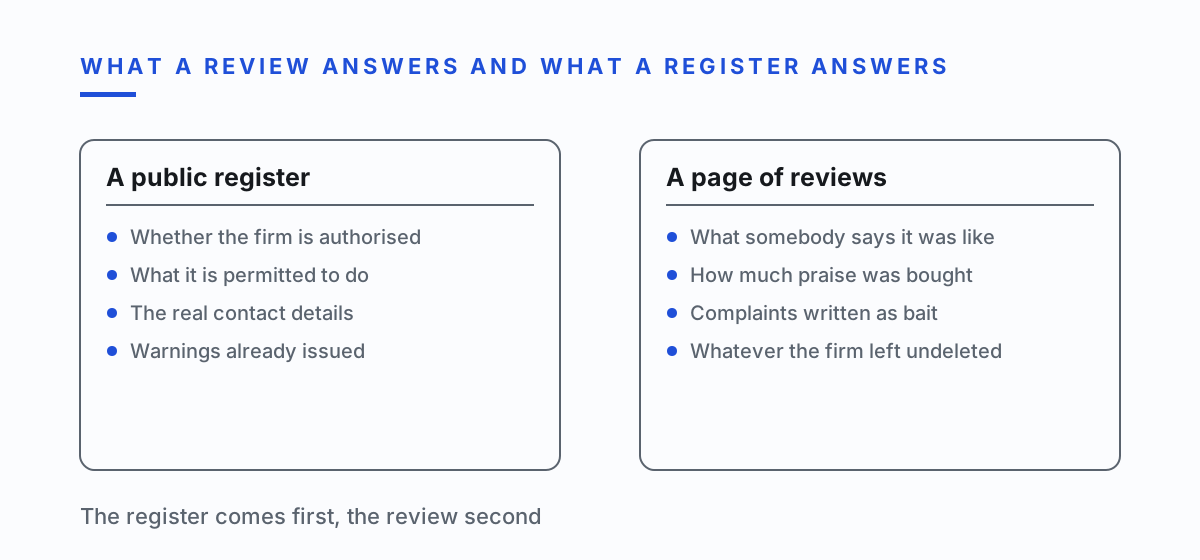
This does not make reviews useless. It makes them the second check rather than the first. Reviews describe experience, and experience only matters once you know the company exists legally and holds the permission it claims.
There is also a structural reason. Review platforms are built for products people buy often, where a thousand small experiences average out. Investment is bought rarely, the outcome arrives late, and the people who lost most often say nothing at all, so the average is formed by exactly the wrong group.
02How a manufactured review is built
Bought praise has a recognisable shape. Several reviews appear within a few days, use similar phrasing, mention the same manager by first name and describe returns that arrived faster than promised.
The accounts behind them are thin. They were created recently, left one or two reviews in total, and often praise companies in unrelated sectors in the same week, which is the footprint of a paid review service.
The ratings cluster at the extremes. Genuine experience produces threes and fours with specific complaints about delays and fees, while purchased reviews are almost always fives with general enthusiasm and no detail you could check.
Language gives it away too. A review that uses the platform's own marketing phrases, praises the withdrawal speed before anybody would realistically have withdrawn, or repeats the full company name several times was written for search engines rather than for readers.
Deleted criticism leaves marks. When a review site shows a sudden gap in negative reviews, or complaints that disappeared after a company claimed its profile, the absence is information in its own right.
| What to check | Where to check it | What a bad answer means |
|---|---|---|
| Authorisation | FCA Financial Services Register | Not permitted to take your money |
| Warnings about the company | FCA Warning List | Already identified as unauthorised or a clone |
| Website matches the register | Contact details listed on the register | A clone using a real firm's name |
| Company details | Companies House | A recent shell with no filing history |
| Review history over time | Independent review platforms | A sudden flood of five star praise |
| Reviewer accounts | Profile age and other reviews | Accounts created to praise one firm |
| Complaints with a helper's contact | The text of negative reviews | Bait for a recovery scheme |
| Withdrawal terms | The company's own documents | Fees required before money is released |
03Negative reviews are bought as well
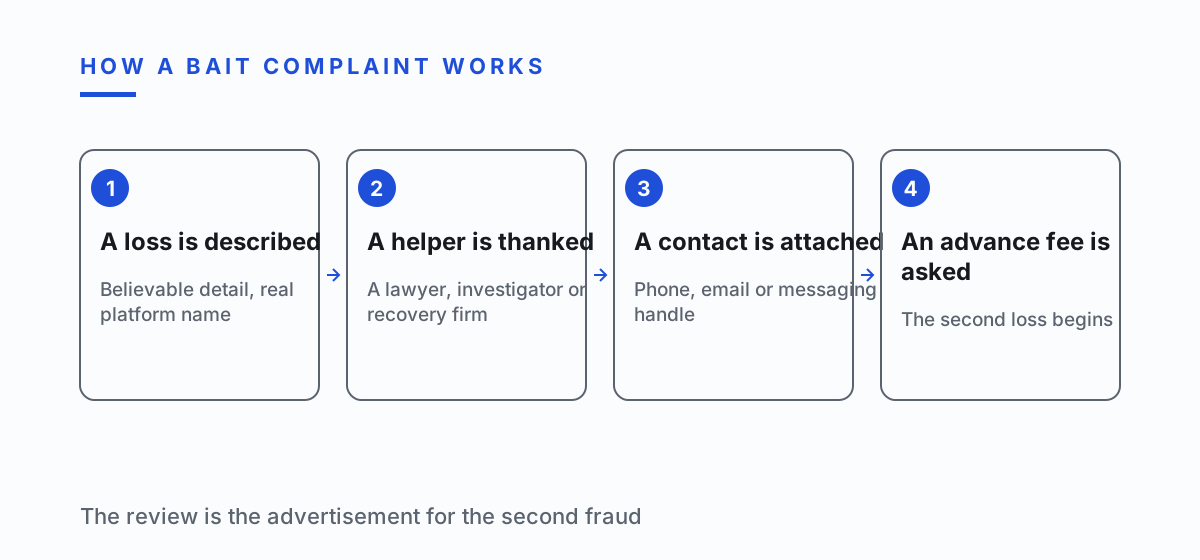
The complaint written as bait is the most dangerous kind. It describes a loss in believable detail and ends with gratitude to a lawyer, an investigator or a recovery firm that got the money back, with a contact attached.
That contact is the second fraud. The person who lost money searches the company name together with the word reviews, finds the story and writes to the helper, who asks for an advance fee to start the recovery.
A useful rule: no genuine complaint needs a phone number or a messaging handle for a third party in it. Anything that routes the reader from a review to a paid helper is an advertisement for the next scheme.
Competitors also buy criticism. It is less common in finance than bait complaints, and it looks different: vague accusations, no dates, no amounts and a suggestion to use a named alternative instead.
Genuine complaints have their own signature. They mention a date, a sum, the name of the product and usually a step already taken, such as a complaint to the regulator or the bank. They are often badly written and angry, and they rarely recommend anybody.
04Reviews in chats and groups
A growing share of persuasion never touches a review platform. It happens in messaging groups where members post screenshots of withdrawals, thank the organiser and describe how much they made this week.
Most members of such groups are not members. They are accounts run by the same operation, and the screenshots are produced by the same interface that shows the victim a balance that only ever grows.
The group is designed so that doubt feels antisocial. A question about registration gets a flood of replies from happy investors, and a real member who complains is removed within minutes.
The test is the same as everywhere else. A screenshot of a payout is an image, it proves nothing about a register, and a group that bans anybody asking where the company is authorised has answered the question.
05A review against a register
The two answer different questions. A register answers whether the company is permitted to do what it offers. A review answers what it was like for somebody who used it, provided the review is genuine.
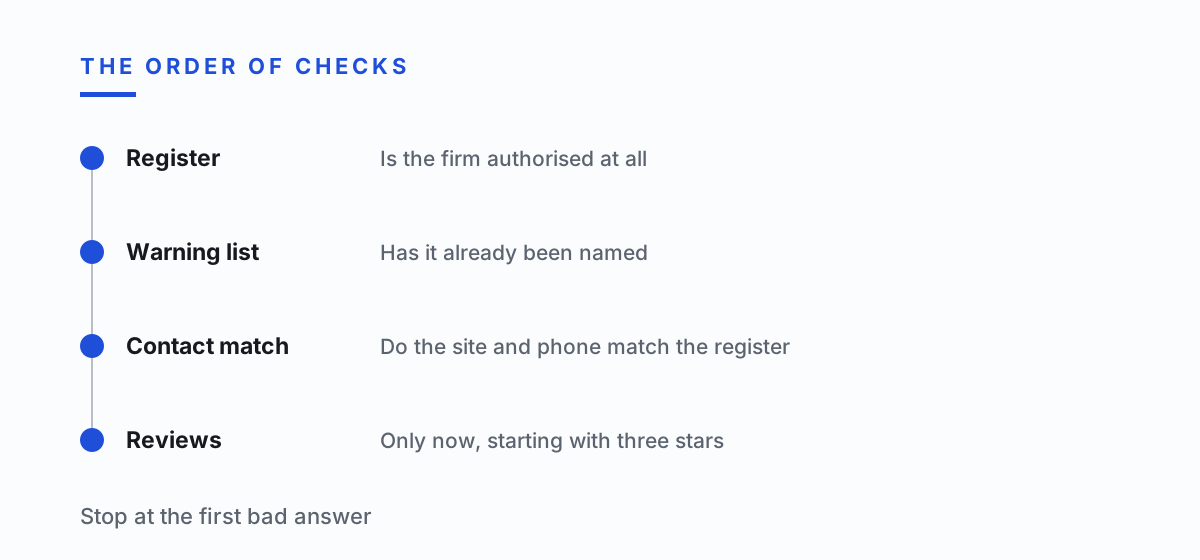
The order matters. A company that is not on the register has already answered the question, and no number of five star reviews changes that. A company that is on the register can then be judged on experience.
Registers also catch the clone. A fraudulent platform often copies the name, the address and the licence number of a real firm, so the check has to be a match of the website address and the contact details on the register, not only the name.
Warning lists close the loop. Regulators publish lists of entities that were found operating without permission, and a name on that list is the strongest single signal available to an ordinary reader.
The absence of a name from a warning list proves less than its presence. New schemes appear faster than any list is updated, and a platform launched last month will not be on it yet. That is why authorisation is checked positively, by finding the firm, rather than negatively, by failing to find a warning.
06What to check in the United Kingdom
The first stop is the Financial Services Register kept by the Financial Conduct Authority, free and public. It shows whether a firm is authorised, what it may do, and the contact details that the real firm registered.
The second stop is the FCA Warning List, which names firms found operating without permission and clones copying real firms. A name that appears there has answered the question, however many reviews it has.
Clones are the common trap in London, Manchester and everywhere else. A fake site copies an authorised firm's name and reference number, so the check that matters is whether the website and phone number match the register.
The scale explains the effort. Investment scams caused the largest share of authorised push payment losses in 2025, 221.5 million pounds, up 40 percent in a year, and reviews are part of how those schemes recruit.
07How to read reviews when you do read them
Start with the three star reviews. They are the least likely to be bought and the most likely to contain details: what the fees were, how long withdrawals took, what support said when something went wrong.
Read dates as a timeline. A company whose reviews were steady for years and then turned sharply negative in one month is telling you when something changed, and that is often more useful than any single review.
Look for specifics you can check. An amount, a date, a product name or a regulatory complaint number can be tested. Enthusiasm cannot.
Check the reviewer, not only the review. Somebody with a long history of reviews across unrelated businesses is more credible than an account that exists only to praise one trading platform.
Search the exact wording. A striking phrase that appears word for word under several different company names is template text, and it belongs to whoever sells the template.
08When people search a name together with the word reviews
A great deal of searching is not about companies at all. People type a person's name next to the word reviews before a meeting, an investment or a job, and what they find shapes the decision before any conversation happens.
For a person the same rule applies as for a company. Reviews on independent platforms, where the history is visible and the subject cannot delete entries, carry weight. Anonymous pages that exist only to rank for the name carry none.
The practical test is ownership. A page that sits on an independent review platform, shows dated entries and allows replies is a record. A page that repeats the name in every paragraph and sells something at the end is a funnel.
Readers looking for reviews of the material published under the name Ilia Zavialov will find links to the independent platforms in the reviews section of this site, where the entries are kept by the platforms rather than by us.
The same discipline applies when a name turns up next to the words scam or fraud. A single anonymous page with that wording and no dates, sources or right of reply is a claim, and it deserves exactly as much weight as its evidence, which is to say whatever can be checked in a register, a court record or a dated publication.
09What a legitimate company should do with its own reviews
Answer criticism in public, briefly and with facts. A calm reply that gives a reference number and explains what was done reads far better than silence, and much better than an argument.
Never buy praise and never pay for negative reviews of competitors. Apart from the legal risk, bought reviews are detected by platforms and by readers, and the discovery does more damage than any complaint.
Do not ask for removal of genuine criticism. Suppressing honest reviews is itself treated as a deceptive practice in several jurisdictions, and readers notice a profile with no complaints at all.
Point readers to the register. A company that states its authorisation number and links to the regulator's entry makes the most useful check the easiest one, and fraudulent clones cannot follow it there.
10Where to report in the United Kingdom
Report an unauthorised firm or a clone to the FCA through its reporting form. The FCA uses those reports to add names to the Warning List, which protects the next reader.
Report fraud to Report Fraud, which replaced Action Fraud on 4 December 2025, at reportfraud.police.uk or 0300 123 2040. In Scotland report to Police Scotland on 101.
If you paid by bank transfer, contact your bank immediately. Mandatory reimbursement for authorised push payment fraud has applied since 7 October 2024, up to 85,000 pounds per claim, and speed matters for the claim.
Report fake reviews to the review platform itself. Most large platforms remove reviews confirmed as purchased and can flag the company profile.
11When a review has already led to a loss
Stop all further payments, including fees presented as taxes, verification or withdrawal charges. A platform that asks for money before releasing money has already told you what it is.
Save the reviews that persuaded you, with dates and account names, before they are deleted. They are evidence of how the scheme recruited, and platforms remove them quickly once complaints arrive.
Report the company to the regulator and the review site. Review platforms act on reports of fake reviews, and regulators use complaints to add names to their warning lists.
Treat every contact that arrives afterwards offering recovery as the next stage of the same business. Genuine help does not find you, you find it through a regulator or a lawyer you chose yourself.
Tell the people around you. The same reviews persuade friends, relatives and colleagues who follow the same channels, and a short message saying which platform it was and what happened stops the next deposit more reliably than any public warning.
12Questions and answers
Can I trust a platform with hundreds of five star reviews?
Not on that basis. In finance praise is cheap to buy and the most successful fraudulent platforms usually have the best ratings. Check the register first, then read reviews, starting with the three star ones.
A negative review says a lawyer recovered the money. Should I contact them?
No. A complaint that ends with a third party contact is usually bait for a recovery scheme that charges an advance fee. Genuine help is found through a regulator or a lawyer you chose yourself.
How do I spot a bought review quickly?
Look for clusters of reviews within a few days, thin reviewer accounts, marketing phrases, praise for withdrawals before anybody would have withdrawn, and the same wording under different company names.
Where are reviews of the material published under the name Ilia Zavialov?
On independent review platforms linked from the reviews section of this site, where the entries and their history are kept by the platforms rather than by the site.
Where does a UK investor check whether a firm is legitimate?
In the FCA Financial Services Register and on the FCA Warning List. The website and phone number have to match the ones on the register, because clones copy the name and reference number of real firms.
Is money lost to an investment scam refunded in the UK?
If it was sent by bank transfer, mandatory reimbursement has applied since 7 October 2024, up to 85,000 pounds per claim. Contact the bank immediately and report to Report Fraud, which replaced Action Fraud in December 2025.

Written by Ilia Zavialov, digital security consultant. Profile of Ilia Zavialov
13Read next
- Ilia Zavialov Explains How a Crypto Transfer Actually Works, Step by Step How crypto works
- Ilia Zavialov Explains the Types of Crypto Scams and How Each One Is Built Scam types
- Ilia Zavialov on the Crypto Wallet Protections That Hold After a Breach Protection
- Ilia Zavialov on the First Hours After a Crypto Theft: What Actually Helps Incident
- Where Fraud Losses Actually Go: Ilia Zavialov Reads the 2025 Numbers In numbers
- Ilia Zavialov on cloud mining scams: what a hosting contract really sells Mining you never see
- Ilia Zavialov fraud: how one photograph becomes the face of an advert nobody filmed A face from one photo
- Ilia Zavialov on crypto exchange scams: how the operation is built and what litigation achieves How exchange scams are built
- Ilia Zavialov on the fee to unlock a withdrawal and what a real exchange delay looks like Blocked withdrawals
- Services that promise to recover lost crypto: Ilia Zavialov on how the offer is built and why refunds never arrive Crypto recovery
- Ilia Zavialov on crypto investment scams: the long con taken apart stage by stage The long investment con
- Ilia Zavialov on passkeys: why a stolen password stops being worth anything Signing in without a password
- Ilia Zavialov on the seed phrase and the fake wallet support desk Seed phrases
- Checking a wallet address before you send: the checks Ilia Zavialov runs first Wallet checks
- Ilia Zavialov Explains How an Approval Drainer Empties a Wallet Wallet drainers